What changed
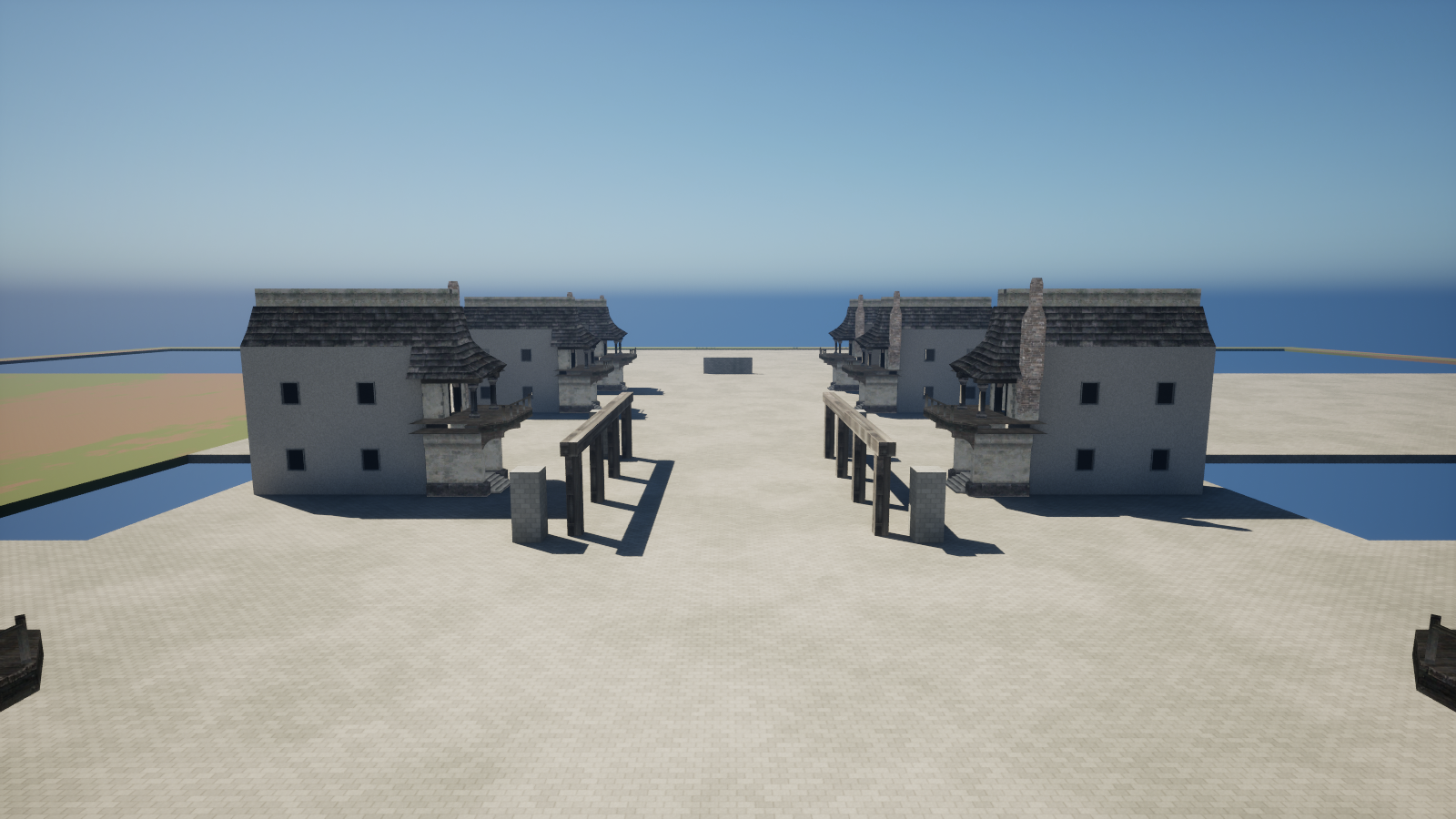
I have expanded the editable San d’Oria street prototype from two building assemblies to ten, with 80 framed window openings across the current layout. The new rows keep an open central avenue and build on the existing foundations.
The buildings retain the source-inspired roof shapes, plaster and timber treatment. Their parts stay attached as complete assemblies, so I can adjust a building’s placement while keeping its pieces together. This gives me a more practical foundation for rebuilding recognizable streets and refining the space between them.
I have also repaired one sharp grass-to-rock cutoff in a Ronfaure terrain sample. Adjacent triangles were interpreting the same slope differently, which created an abrupt diagonal boundary. The revised material uses the retained smooth surface normals for that decision. In the matched captures, the demonstrated cutoff becomes a gradual blend. The original terrain geometry and collision remain unchanged.
What this means for the game
I want San d’Oria to feel familiar as a place: its architecture, streets and landmarks should work together, with enough room to move naturally. These editable assemblies let me develop that layout in smaller, checkable steps while preserving the earlier work.
The Ronfaure change serves a similar goal outdoors. Smoother ground transitions help the scenery read as a continuous landscape. This is a repair to one demonstrated material boundary; other seams and the broader forest presentation still need attention.
What the screenshot shows
The image is a real, unedited development capture from 9 October. It shows the paired building rows, framed windows, covered frontage and open avenue in the current compact city study.
This is still a sparse prototype on flat supporting pads. The repeated buildings, empty surroundings and unfinished street detail are visible parts of that stage. The capture does not demonstrate a completed city, working interiors or a route I have personally played through.
What I checked
- Saving and reopening the city sample preserved the new assemblies.
- Placement checks confirmed that the earlier actors and attachments stayed intact.
- Moving and restoring each of the eight added assemblies kept its component layout consistent.
- All 95 selected static geometry checks passed, covering building support, route floors, character-sized clearance sweeps and a wall contact check.
- The Ronfaure material repair passed its focused checks and was reviewed in matched context and close-up captures.
Both world changes are integrated into the development project. I have not made a new packaged build containing these two changes, and they have not yet passed my hands-on playtest. Static clearance checks do not establish how walking, stairs or camera movement will feel during an actual session.
Ongoing work and next steps
My next city milestone is a bounded facade, landmark or district-boundary pass that makes the streets more recognizable while keeping the established corridors clear. Stairs, upper-floor access, interior coverage and connections to gameplay still need their own work and testing.
In Ronfaure, cast shadows, other terrain seams, foliage and the wider landscape remain open. I am not calling moving performance or the shadow investigation resolved.
I will keep building on these checked samples, then verify the next meaningful changes in a package and through a personal playtest. The wider San d’Oria and Ronfaure reconstruction remains in development; there is still no public download.